





The plain truth: applying Plain Language to creating accessible, user-friendly texts

The plain truth: applying Plain Language to creating accessible, user-friendly texts
John Linnegar
PLAIN (the international association of plain-language professionals) has drafted this definition:
‘A written communication is in plain language if its wording, structure, and design are so clear that the intended readers can easily find what they need, understand it, and use it.”
This requires authors to make informed judgments about whether the text (”wording”) is clear enough. It also means using good organisation (“structure”) and layout (“design”) to help them navigate.’
During this webinar, the aim will be to help practitioners learn how to harness Plain Language (or plain English) principles to improve the flow, accessibility and easy comprehension of authors’ texts. The aim is to introduce participants to a suite of handy Plain Language techniques with which to turn verbose, high-register texts into those that the identified readers will find accessible and understandable at first reading.
‘The message is important, not the fancy language wrapped around it.’
(George Orwell)
It’s astonishing how many writers feel they need to ‘dress up’ their writing to the extent that they lose their natural (aka plain) voice completely! Their reasons are no doubt many: from wanting to impress to needing to sound important or authoritative – and sometimes even because their boss or professor ‘writes like that, so it must be good’! But in this day and age we should rather be ‘dressing down’ writing to make it more accessible and flow better. Where writers themselves are incapable of doing so, the task usually falls to us wordsmiths to dress (not dumb!) writing down.
We need to make authors’ words clear and straightforward, using only as many words as are necessary. Plain Language helps us to do so by dispensing with the ‘fancy language wrapped around [their words]’: obscurity, inflated vocabulary and convoluted sentence constructions. Applying Plain Language principles systematically, our aim is to render the authors’ messages readily understood at first reading.
By the end of this online workshop you will be able, with confidence, to:
● convert long, complex sentences into shorter compound or simple ones;
● replace, where possible, passive voice (O-V-S) constructions with active ones (S-V-O);
● remove embedded clauses from complex sentences;
● replace ‘difficult’ polysyllabic words and jargon with more everyday, accessible synonyms (eg ‘remuneration’ with ‘pay’ or ‘wage’);
● make impenetrable noun strings accessible by inserting prepositions and articles into them;
● supplant nounisms (nominalisations) with healthier vigorous verb equivalents (eg ‘invitation’ with ‘invite’);
● dispense with archaisms such as ‘aforesaid’, ‘herein’, ‘thereby’, ‘whereafter’;
● find ways to introduce useful visual elements (eg lists). Fundamentally, we wordsmiths will be asking – and answering – the questions ‘Who is the audience?’ and ‘What are their needs?’ In so doing, we’ll be using the reader-centric approach authors should have adopted.
About the presenter
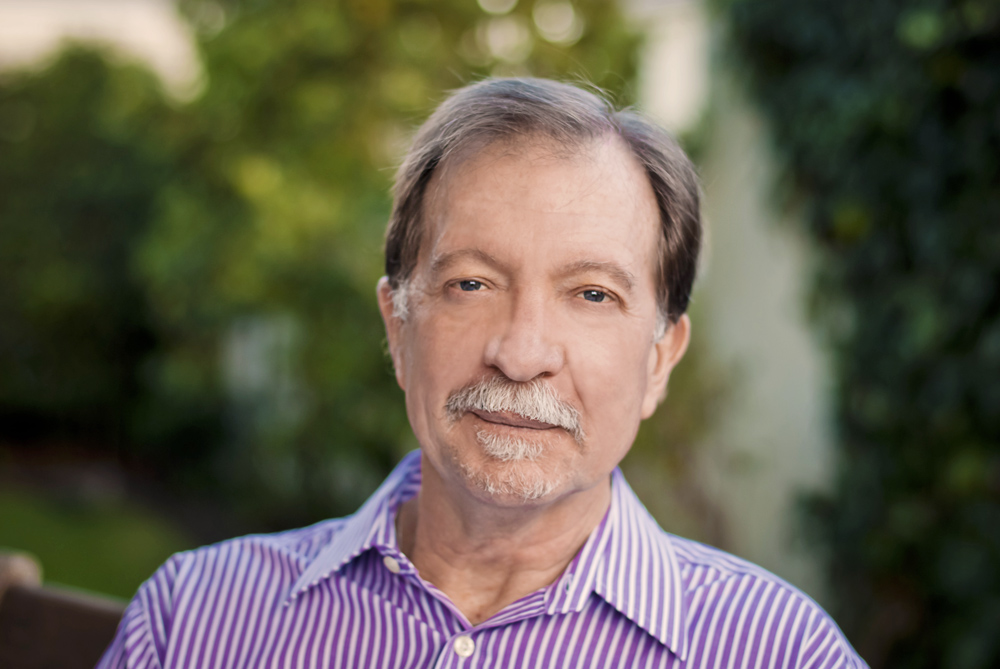
John Linnegar began his career as a teacher of English, History and Mathematics. His passion for working with words was ignited by his high school teachers of English, Latin and German. Those strong grammatical foundations combined with a love of his mother tongue led him towards authorship and, as a direct result, towards improving authors’ texts for publication. He has been an avid ‘improver of authors’ words’ for four decades now, and remains dedicated to making their texts read as clearly as possible (and in the process saving a reputation or two!).
John is author of several texts dealing with matters grammatical and stylistic, including contributions to the Oxford English grammar: The advanced guide (OUP, 2015) and, most recently, with Ken McGillivray, grammar, punctuation and all that jazz . . . (MLA Publishers, 2019). He currently offers a personalised ‘online’ Grammar for Editors course aimed at those who need to brush up their English grammar and an online training course on Plain Language.


