
By Claire Bacon, 30 June 2026
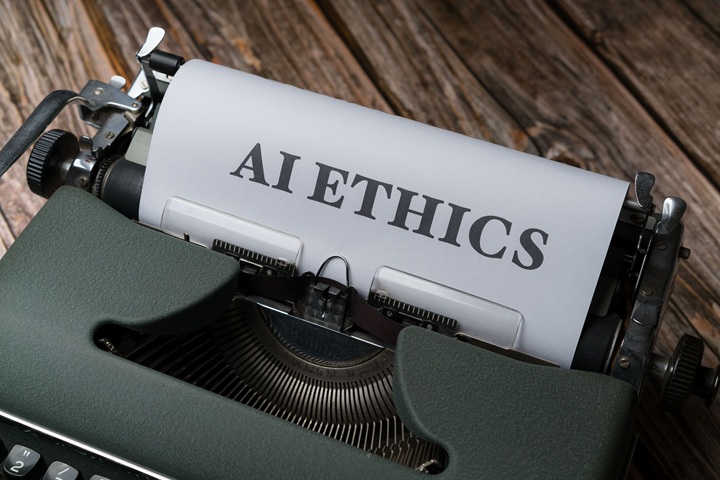
Those of us who attended Nigel Harwood’s UniSIG talk on the use of AI in academic writing in March might be forgiven for feeling rather hopeless. It seems that university students are using generative AI (hereafter referred to as AI) with abandon in their university assignments and that we educators have no means of controlling or guiding this AI use. At the UniSIG meeting on 19 June, Dr Kate McIntyre challenged this hopelessness by emphasizing the need to educate students on the use of AI in scientific writing. In her role as scientific editor at the Department of Genetics at the University Medical Center Groningen (UMCG), Kate is now teaching PhD students about the rules surrounding AI use, how AI works, and the risks and benefits it may have for their learning and work.
The rules surrounding AI use
In her lectures, Kate explains the rules for using AI set by the UMCG, by publishers, and by funders. At the UMCG, hospital employees must use official AI systems for personal, business-sensitive or company data. These systems are contracted by the hospital and do not use hospital data to train their models. Outside of this sphere, the rules soften a little, and Kate makes sure her students are aware of the relevant codes of conduct they should be following, e.g. with respect to information security and research. She also explains the legal reasons underlying these guidelines so that students understand why they should be following them.
Major publishers like Springer Nature recognized almost as soon as ChatGPT arrived that these tools cannot be acknowledged as authors because they cannot think and be held accountable for what they report. However, the rules on how authors can use AI and how they should report this use vary. Here, Kate hands the responsibility to her students and tells them to check the specific rules of the journal they are submitting to. She also points out the AI rules of the main funding agencies. For example, the Dutch Research Council (NWO) allows applicants to use AI to write grant applications, but does not allow reviewers to use AI when reviewing grants. Kate acknowledged that there is currently no real way to monitor this, but she can at least make her students aware of the rules and leave the decision to them.
Personal responsibility
In response to the AI use she has observed over the last two years, Kate also talks to her students about personal responsibility when using AI in their work and learning. She emphasizes that they are responsible for making sure that everything they write is correct and complete and that any mistakes or omissions cannot be blamed on AI. She also stresses they need to be honest and open with co-authors about their use of AI, and mentioned some cases in which students have damaged their professional reputation by not doing so. Growth and learning may also be affected by AI use, and Kate emphasizes that writing is a craft that you have to learn by doing. If you are relying too much on AI to do your writing, you may not be learning the skill sufficiently or developing your own unique writer’s voice. She ends by asking students if they can draw the line where tool use is preventing them from learning.
Risks and benefits
Kate is very open with the students about how AI tools can be helpful, for example, in basic copyediting, generating quick summaries and providing feedback on writing. However, she also emphasizes how AI can mislead the user. At the end of the day, these tools do not think, they simply predict the next word (or words) in a sentence – and these predictions are not always correct. For example, they can go off on a tangent and lead to hallucinations, or they can leave out important information because they cannot access it. They are also programmed to present information very confidently and can easily convince the user that what they are saying is true and important, which affects students’ writing. Kate always backs these points up with concrete examples of how relevant these risks are. One such example is an article in Nature emphasizing how AI chatbots are basing most of their output on the top 1% of most-cited articles. By pushing users to such a small proportion of available information, AI is clearly propagating hidden biases. Kate also stresses the more personal risks of AI for writing. For example, how it can alter meaning and that it cannot know the context and so place focus on the wrong points. She also challenges her students to think about how dependent they are on AI tools. If they rely too heavily on them for knowledge and language, they might not be able to have proper discussions about their work – or defend their thesis at the end of their PhD.
Impact on writing and publication
Kate also talks about the positive and negative changes she has seen in scientific writing since AI came on the scene. On the one hand, she has noticed that the level of English has improved considerably, with far fewer spelling and grammar mistakes. However, there has also been a considerable decline in proper citation practices. This not only includes hallucinated references but also students stating things as established information when they aren’t – largely because the AI model has confidently presented this as known information. Another problem is lack of external cohesion between paragraphs. Students are producing blocks of informational text but are not adding the narrative linking that shows the reader how this information is connected. A broader impact of AI on writing is text that sounds the same across many publications, which is having a wider impact on publication itself, and the overproduction of low-quality papers.
Food for thought
The good news is that Kate’s students are very responsive to her message. They understand the importance of the issue and want to have constructive discussions about it. They contribute thoughtful perspectives, some of which have even changed Kate’s mind on certain things! By popular demand, Kate now delivers her lecture twice a year and the students want this content to be made available to bachelor and masters students as well.
Kate finished by talking about how things are shifting yet again. AI tools are likely to become more expensive in the near future because the subsidization of costs by the companies in order to train models and gain customers is no longer economically feasible. There is also growing awareness that AI tools cannot be relied upon completely and that human oversight is needed. This is indeed good news for human editors and educators who value the effort needed to develop true writing skills. Much of the discussion after Kate’s talk centred around the importance of proper scientific writing training as well as training in AI literacy and responsible AI use. There seemed to be a general agreement that AI should not be used to simply generate text and that students need to be encouraged to develop their critical thinking skills.
|
Blog post by: Claire Bacon |


