
By Paula Arellano Geoffroy, 27 August 2026
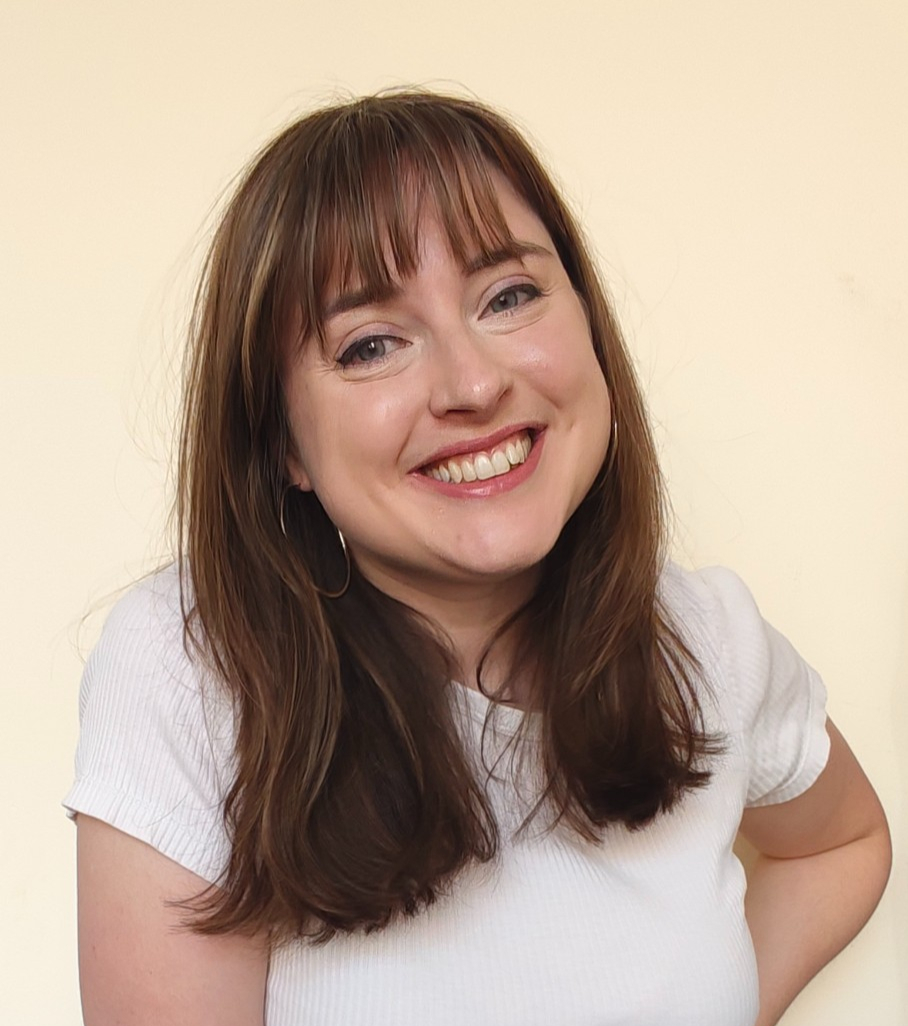 Editorial and communications consultant Sarah Fairman joined SENSE in May this year. She has a BA in Modern Languages (French, Russian and Spanish) and an MA in Russian and Eurasian Studies, and has been living in the Netherlands since 2017. I reached out to her and she was happy to introduce herself to our community.
I understand that you are British but have settled in The Hague. What made you move to the Netherlands?
I moved to the Netherlands to study because I’d heard that Leiden University had a good MA course in Russian and Eurasian Studies. The second reason was that I knew that after 2020 it would be a lot harder for a British national to move to a European Union country, so it was my last-ditch attempt to live abroad (although I had previously lived in Russia, Canada and Uzbekistan).
I always knew I wanted to stay in the Netherlands for a few years, but I didn’t expect to be here for nearly a decade!
How did you become a language professional? How many languages do you speak?
I have always been fascinated by language, and in all the jobs I had before becoming a professional editor, I was always the go-to person for copywriting and cleaning up texts. So I thought, why not do this full time?
After a contract finished as a Content Manager, I started my own business, No Nonsense Communications. At first, I worked as a freelance copywriter and English teacher (while waitressing!). Then, Expatica hired me full-time and I spent four happy years there while editing a cultural heritage magazine on the side. Now, I’ve gone full time as an editorial and communications consultant – I still write, but I focus more on the coaching, feedback and organization side.
If I’m showing off, I speak six languages. But if I’m being accurate, I speak three fluently (English, French and Dutch), another one well (Russian), and I can get by in two others (Ukrainian and Spanish). I haven’t decided which to learn next, but I do somehow find myself in a lot of situations in which speaking German would be handy.
What kind of projects do you enjoy the most?
There are two things I absolutely adore doing: one is telling people’s stories and the other is making difficult concepts easy to understand.
Recently, I edited a charity newspaper, which was a real highlight. I got to learn about different people who’d moved to the Netherlands – students, high-earners and refugees – and why they’d come here. It made me feel part of something, as I could recognize myself in their stories, but it was also fascinating to read how our experiences had differed.
Another current highlight is editing for a cybersecurity policy and analysis publication associated with a non-profit. I had some knowledge of the topic before I worked there, but in this role, I learn so much about it from experts who have spent years working on it. I feel so lucky to get to collaborate with them.
I love working in roles that are doing good, whether that’s raising awareness or providing solutions, so I also volunteer planning and creating content for a climate charity.
Do you have an opinion of AI and its impact in the language profession?
I have a lot of opinions, but I’ll try to keep it short.
If you can already do something well, AI can help you do it faster and on a larger scale; it can’t give you skills or judgement that you don’t have. In my work, I use it to speed up the spellchecking process and to find errors quickly. Everything in its output, I take with a grain of salt. I can do my job without it, so if a client would rather I didn’t use it, I’m happy to cut it out of the workflow.
While I’m not totally anti-AI, I do think it’s given a lot of people the idea that they can replace creatives. I’m also upset about the destruction of nature for data centres, the theft of creative work to power LLMs, and the gatekeeping of information by big tech companies.
I think it’s important to be aware of how the technology works and critical of the way it’s being used. Eschewing it completely isn’t the answer, but neither is hopping on board without question.
Do you read for pleasure as well? Have you read something interesting recently?
Yes, I read about 50 books a year and am in six book clubs! My favourite book that I read recently was ‘Piranesi’. It’s like ‘Backrooms’ crossed with ‘The Secret History’.
How did you learn about SENSE and why did you decide to join?
I think I came across it in a web search and I was super curious about it. I saw that there were lots of events and a community that’s passionate about language, so I’m looking forward to attending and meeting other members in person.
|
Blog post by: Paula Arellano Geoffroy |


