By Tony Sheldon, 10 November 2026
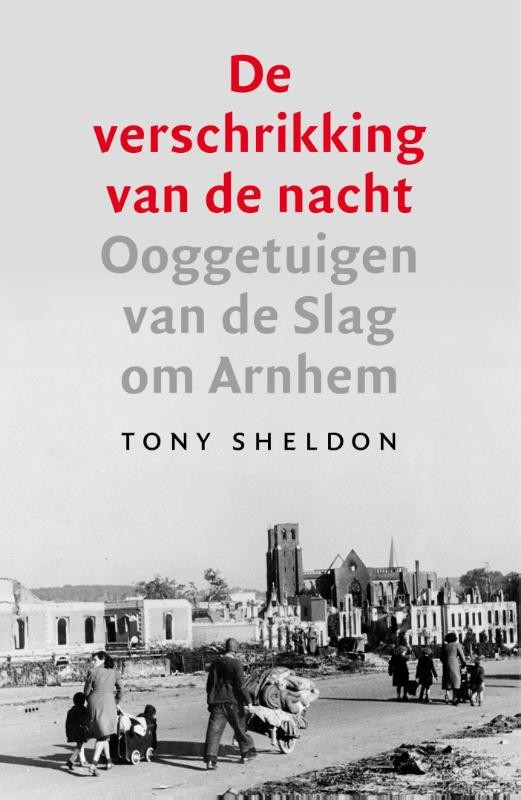 Wil had spoken for over an hour in her little flat in Velp; I had sat transfixed. She recalled how she had sheltered with her parents in a cellar on the Rijnkade in Arnhem. It was Sunday evening, 17 September 1944 and outside British troops from the 1st Airborne Division were trying to fight their way through to the bridge.
Had the Battle at Arnhem succeeded, the Second World War might have been over by Christmas, thousands of Dutch would not have died in the hunger winter to come, and many thousands of troops of all nationalities returned safely to their families.
They lost, and the Dutch in and around Arnhem, unwilling or unable to flee, would have a ringside seat in the conflict, bearing testimony to the tragedy. Wil van Koldenhoven-Veldhuizen, then 17, recalled that evening in ’44, the loud banging upstairs, troops from the 2nd Para’ Battalion coming in, how they were thirsty and looked very tired and how some were badly injured. But they were still ‘happy boys come to liberate us’.
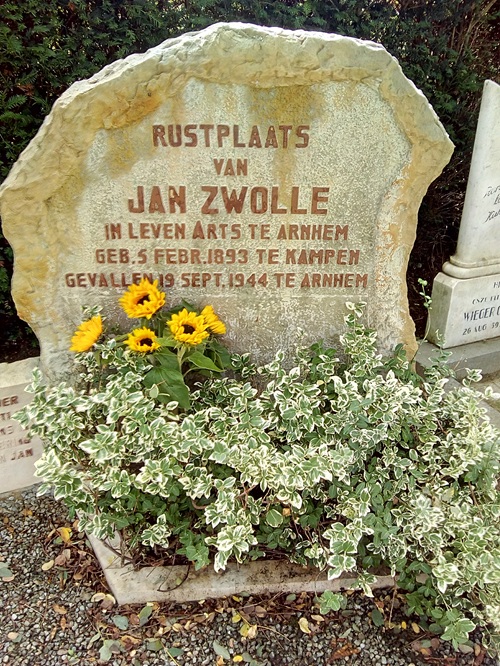
She recounted how their local general practitioner, Dr Jan Zwolle, was then called and who, together with her father Cees, gave first aid to two wounded Airborne troops. The worst injured Corporal Arthur Maybury would die that night and be buried by the Dutch in the backyard. But another, a Private John Watkinson, survived. Then by Tuesday morning, the battle all but lost, German troops returned.
 These SS troops she remembers being very young and very angry accusing everyone of being traitors. The Dutch were bundled out of the cellar ‘with machine gun in our backs’. No one was allowed to collect belongings from upstairs.
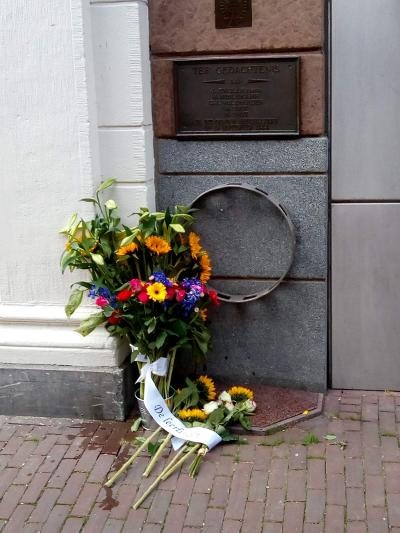
‘My father and all the men were to go right, and we went to the left. It was horrible... my mother and I opened our eyes, saw the streets. Everything shot up, everything had happened in a few days.’ It would be the last time Wil would see her father. The men were marched off to the Bakkerstraat nearby and machine-gunned. Today only a small brass plaque remains to remind us of the war crime resulting in the deaths of five men, 82 years ago.
I had chanced upon Wil’s story back in 2004 in the pages of ‘Medisch Contact’, the magazine of the Royal Dutch Medical Association (KNMG), itself founded through doctors’ resistance to the Nazis. An article on events during World War II simply said, ‘Dr Jan Zwolle shot September 19th 1944’. Checking the diary of commemorative events that year, I found his name in an article about a gathering in the Bakkerstraat. I sold the idea for a news story to the British Medical Journal, went along and approached who looked like the eldest person there to see what they knew and get a quote. Wil, though emotional about her father, was kind enough to invite me back to her home to hear the whole story. As my microcassette recorder clicked off after nearly two hours she said that there were many more like her, eyewitnesses who have not spoken before, but ‘you’d better be quick, we are getting old, forgetting and dying’, she explained. She asked me if I would like some contacts. Twenty-five years as a reporter screamed at me that this was a story.
 Over the next ten years, whenever my freelance career gave me a day off, I travelled around the Netherlands armed with a microcassette voice recorder, bad shorthand, and a folding bicycle. This together with a working knowledge of Dutch and a nerd-like interest in World War II, weaned on the 1960s Commando and Victor comics, would pay dividends. I sat down with elderly men and women with one question: ‘What happened to you?’. They would tell in faltering English how the Airborne landed on Ginkel Heath and I’d stop them. I told them that I knew that, ‘but what happened to you?’. When that mortar bomb landed on the Paasberg School in Oosterbeek at 14:45 on Thursday 21 September were you hurt? I added, please speak in Dutch. People needed to talk in their native tongue about events that touched them so deeply. I could struggle with the translation later.
At first I had no plans to write a book, not knowing how many people I could reach. However, slowly at first and, helped by an article in ‘De Gelderlander’ by Harry van der Ploeg, the interviewees came forward. I eventually realized I had eyewitness accounts of every major event in the battle. So much was fought out in people’s back gardens, children’s bedrooms, parks, squares and farmyards. I had enough material not just for a collection of personal impressions but a comprehensive people’s narrative of the whole and I began to write up my civilians’ history of the Battle of Arnhem.
The response from UK literary agents was encouraging but predictable. Yes, it would make a good book, and no, there is no market for such a book in the UK. I finally turned to Amsterdam’s Sebes and Van Gelderen, who said yes and agreed to have it translated. In 2015 Utrecht’s Kosmos published ‘De Verschrikking van de nacht’ – The terror of the night, a quote from Psalm 91 of the Bible which appears in several accounts of the battle. It was translated with great care by Roelof Posthuma.
For me the best part of the last 20 years is the honour of being allowed to share the wartime experiences of the Dutch young men and women, teenagers, and children, who endured the battle of Arnhem and who had the courage to remember it 60 years or more later.
People such as Mrs Anje Brummelkamp-Van Maanen, then 17, who together with dozens of other Dutch volunteers stood lined up in the rain outside Oosterbeek’s Tafelberg Hotel, a makeshift field hospital set up by her father Gerrit. SS troops had just retaken the building and, expecting to be shot, the Dutch whispered to each other to sing the Wilhelmus.
Or Gé Hoedeman, just 13, who held a field dressing to a dying British soldier’s chest in the cellar sanctuary of the Dennenoord Estate in Oosterbeek where his father had been the gardener before the battle.
Or Tineke Coebergh, then 6, whose family were ordered by Airborne soldiers to leave their house for their own safety. Her mother Thea carried her screaming two-month-old baby in her arms, and fled with her three children under 9 into the street where a battle was raging. But, one of the soldiers remembered, she first had the presence of mind to turn to them and say, ‘All this is terrible for the little ones, but we are glad you have come. Goodbye and God bless you.’
Or Annie Brink, then 21, who smuggled Corporal Don Hardman and others through darkened streets west of Arnhem and back to Allied lines. Forty-three years later he would meet her at a party and thank her for saving his life.
 And finally Ans Kremer, who spoke of the bond between the British and Dutch that remains today. She was just 12 when she and her family stayed put as the Airborne built a fortress of their home on the Stationsweg in Oosterbeek and successfully defended it against all attacks for nearly a week. She told me: ‘We shared what happened to them, the wounded, the dead, the hunger. It was a contact which formed a very strong feeling.’
Today my book remains available as an e-book and second-hand through Bol.com. It can also be found in many libraries across the Netherlands.
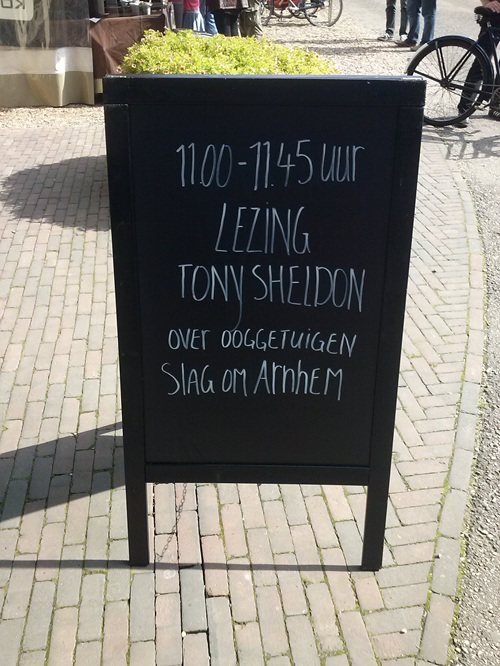
I keep the history alive through public speaking, in particular by giving a guided tour each year starting outside Oosterbeek’s Schoonoord Restaurant on the Sunday afternoon following the main service at the Arnhem Oosterbeek War Cemetery.
|
Blog post by: Tony Sheldon |